Freight & Shipping Web Platform – Modern Development
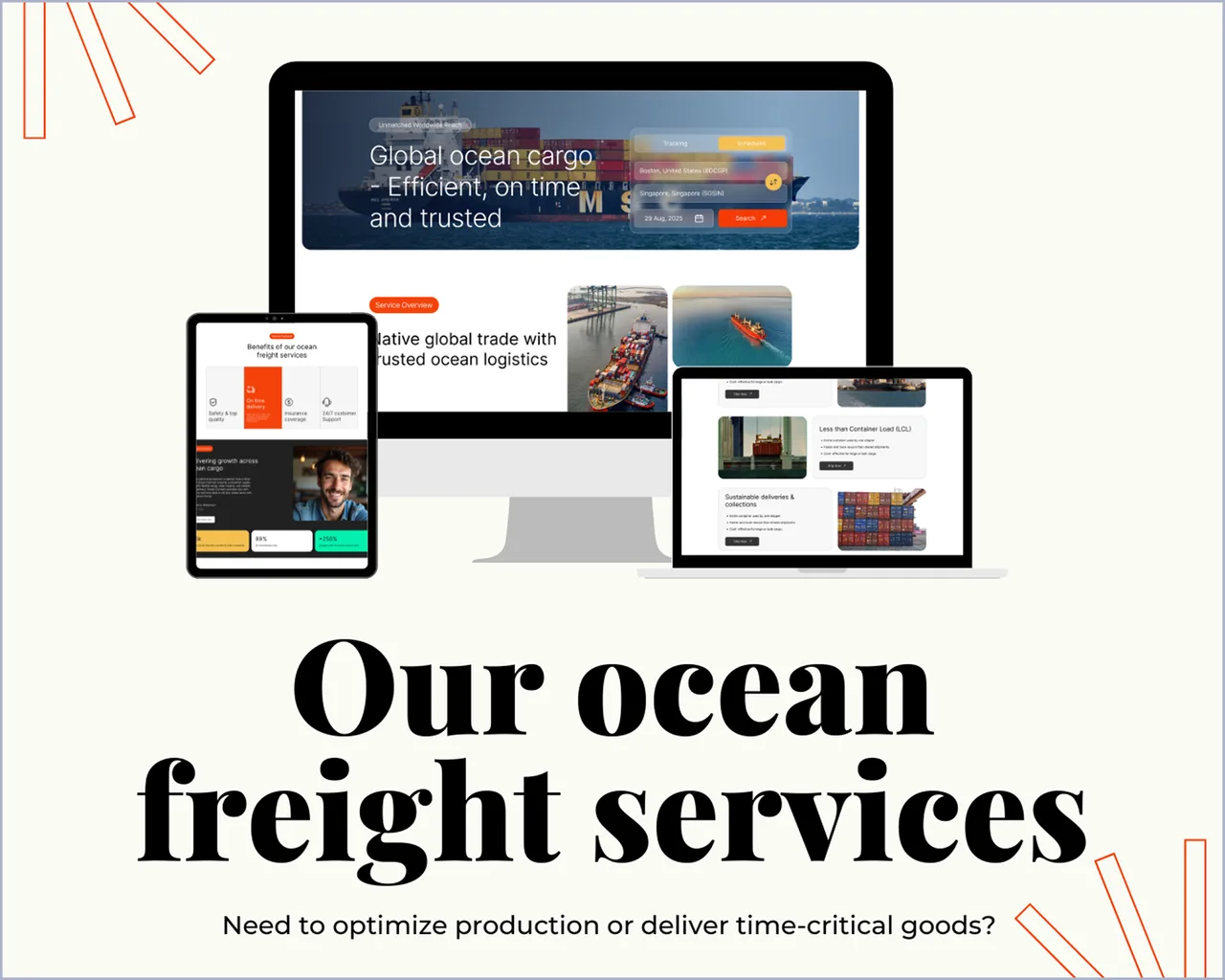
A fully responsive and modern website developed for an international ocean freight and logistics service provider. The platform showcases global cargo solutions, shipment tracking features, service categories, and detailed logistics information through a clean, intuitive interface.
Project Overview
The Freight & Shipping Web Platform is a fully responsive and modern website designed for an international ocean freight and logistics provider. The system highlights global cargo solutions, service categories, shipment tracking options, and essential logistics information through a clean, professional, and highly intuitive interface.
The client is a mid-sized freight forwarding company operating across 12 countries. Their old website was a 2016-era WordPress site with broken contact forms, outdated rate cards, and no mobile optimization. Potential enterprise clients were evaluating them against competitors with modern, professional websites — and the client was losing deals before the first conversation.
We built a modern ReactJS application with a MongoDB backend for flexible content management, Node.js API layer with gRPC for internal microservice communication, and a CMS-like admin panel that lets the client update routes, rates, service descriptions, and testimonials without touching code.
Built to support both enterprise clients and global traders, the platform simplifies how users explore freight services, request quotes, and access shipment-related information — all in a visually organized and efficient manner. It elevates the company's digital presence and enhances customer trust through a world-class user experience that matches the reliability of their logistics operations.
The Challenges
The problem we faced.
Users struggled to understand service categories, routes, and freight options due to unclear structure — the old site had a single "Services" page with a wall of text that didn't distinguish between FCL, LCL, break-bulk, or project cargo.
A lack of modern branding and visuals made the services appear less professional than competitors — the website used stock photos of random cargo ships that didn't represent the company's actual operations or fleet.
Important details like tariffs, shipping routes, transit times, and service types were buried in downloadable PDFs or missing entirely — customers had to call the office to get basic information that should have been on the website.
Slow loading and inconsistencies in responsiveness caused users to leave the website early — the WordPress site loaded in 8+ seconds on mobile due to unoptimized plugins and images.
The quote request form was a generic contact form with no structured fields for cargo type, volume, origin/destination — resulting in back-and-forth emails just to gather basic requirements.
There was no way to showcase client testimonials, case studies, or track record — the company had 15+ years of experience but their website didn't convey any of that credibility.
The Solutions
What we built instead.
A clean, enterprise-grade UI/UX with a professional global freight aesthetic — powerful visuals of actual cargo operations (not stock photos), clear hierarchy for all service categories, and a color system that conveys trust and reliability.
Service-centric navigation covering ocean freight services (FCL, LCL, break-bulk, project cargo), cargo solutions, container specifications with visual guides, routes & transit timelines on interactive maps, and documentation and compliance requirements.
Quote request optimization with a structured multi-step form (cargo type → volume → origin/destination → timeline → contact), better information prompts with tooltips, faster submissions with auto-save, and a 45% improvement in qualified inquiry volume.
A responsive, mobile-friendly structure perfectly optimized for tablets, mobile devices, and large screens — with faster load speeds (under 2 seconds) through image optimization, lazy loading, and edge caching for global users.
A credibility showcase section featuring client testimonials with company logos, case studies of major shipments, industry certifications and memberships, and a timeline of company milestones — building trust before the first sales conversation.
A self-service content management system allowing the client's team to update routes, add new service offerings, publish industry updates, and manage testimonials without developer involvement.
Project Outcomes
The results, measured after launch.
Four numbers that summarize what changed once the system went live.
Tools & Technologies
What this project was built with.
More Work
Other real projects.

Start Here
Bring us the problem.
We'll bring back a scoped plan.
A structured conversation about your product — your users, your workflows, your constraints. We scope what should be built first, what can wait, and what it takes to ship it.